Unlocking Your Potential: The Science Behind the Group-Based Helen Garden Loop Workout
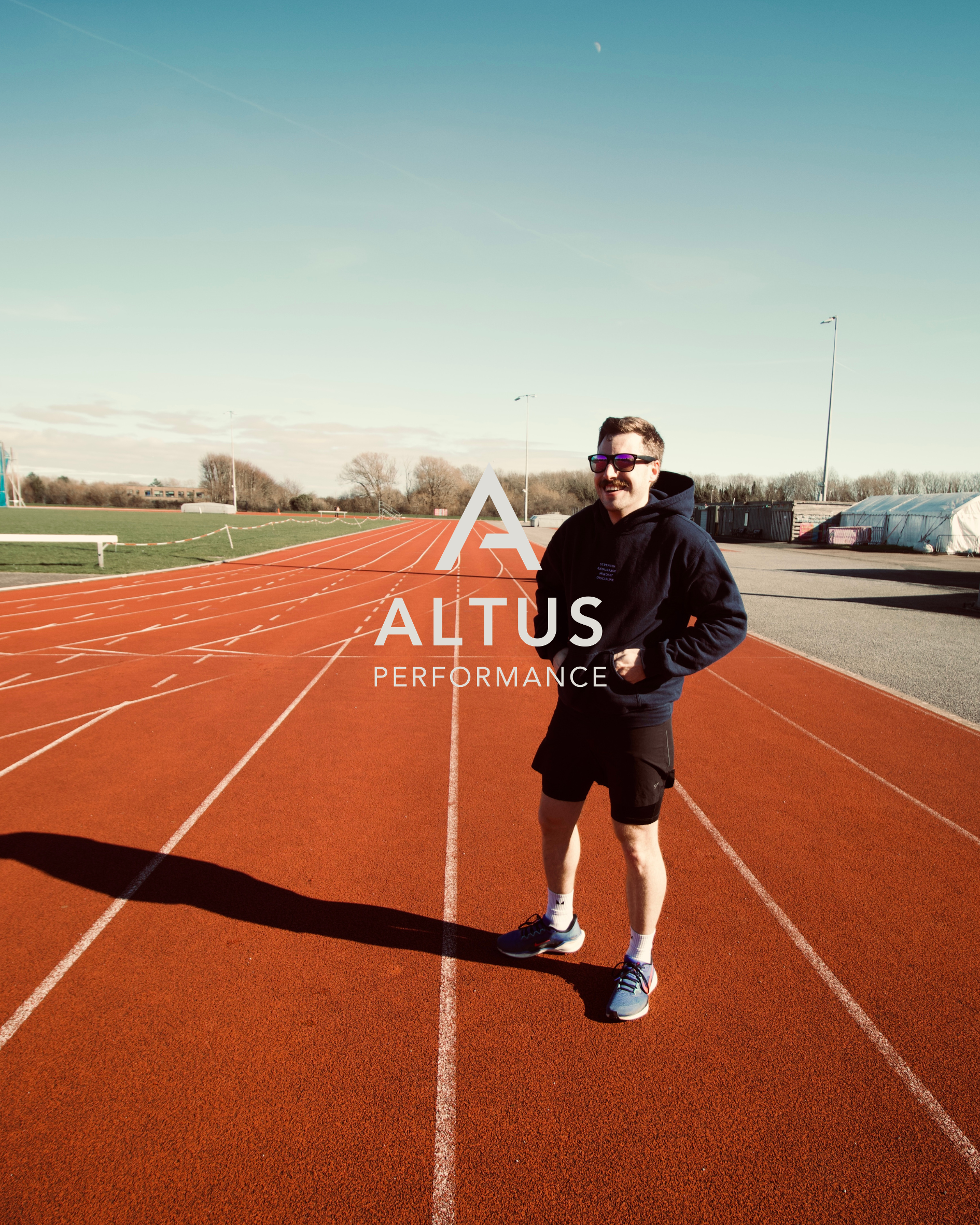
Running workouts often focus on pushing limits, but improving how you run can be just as important as running hard. The Helen Garden loop workout blends structured performance training with live coaching and a supportive group environment. This approach not only builds aerobic capacity but also enhances running technique and pacing skills. Here’s a science-backed look at why this session works and how it can help you run better.

Structured Efforts Build Aerobic Capacity
The workout consists of four continuous 4-minute effort blocks around the Helen Garden loop. This format targets the VO₂ max system, which is crucial for endurance and performance. Research shows that interval training with repeated high-intensity efforts lasting 3 to 5 minutes effectively improves VO₂ max by stressing the cardiovascular and respiratory systems (Laursen and Jenkins, 2002).
By running at a controlled but challenging pace, you push your aerobic limits without overexerting. The consistent loop helps maintain rhythm and pacing, which is essential for maximizing oxygen uptake and energy efficiency during these efforts (Billat, 2001). This structure allows you to train your body to use oxygen more efficiently, improving endurance and speed over time.
Real-Time Coaching Enhances Technique and Efficiency
Unlike solo runs or set-and-forget workouts, this session includes live coaching focused on cadence, posture, and running mechanics. Scientific studies confirm that running cadence (steps per minute) influences running economy and injury risk. Increasing cadence by 5-10% can reduce vertical oscillation and ground contact time, leading to more efficient running (Heiderscheit et al., 2011).
Posture and mechanics also play a vital role. Proper alignment reduces unnecessary energy expenditure and lowers the chance of injury (Novacheck, 1998). Having a coach provide immediate feedback helps you make small adjustments that add up to better form and performance. This hands-on guidance supports motor learning, allowing you to internalize efficient movement patterns faster (Schmidt and Lee, 2011).
Group Dynamics Support Motivation and Consistency
Running in a group creates a community atmosphere where no one gets left behind or lost in the session. Social support has been shown to increase motivation and adherence to exercise programs (Carron, Hausenblas, and Mack, 1996). When you run alongside others with similar goals, you naturally push yourself harder and maintain focus.
The group setting also helps regulate effort. You can dial into your own intensity while staying connected to the pack, which encourages pacing consistency. This balance between individual effort and group cohesion can improve overall workout quality and enjoyment (Tucker et al., 2013).
Effort Control and Pacing Strategy Develop Mental Skills
The workout’s design encourages effort control and pacing strategy, key components of endurance performance. Learning to manage your pace during repeated efforts helps prevent burnout and improves overall race strategy (Foster et al., 1993). The breaks between blocks allow you to reset and reflect on your effort, making adjustments for the next round.
This approach trains both the body and mind. You develop awareness of how different intensities feel and how to sustain effort without overreaching. This skill translates well to races and long runs, where pacing can make the difference between finishing strong or fading.
Suitable for All Abilities with Relative Effort
One of the session’s strengths is its inclusivity. Effort is relative, meaning everyone can participate at their own level while benefiting from the structure and coaching. Research supports that relative intensity training, where individuals work at a percentage of their maximum capacity, leads to meaningful fitness gains regardless of starting fitness (Jones and Carter, 2000).
This makes the Helen Garden loop workout accessible and effective for runners chasing performance goals or simply wanting to improve their running form and endurance.
This group-based workout combines science-backed training principles with live coaching and community support. It builds aerobic capacity through targeted intervals, improves running efficiency with real-time feedback, and fosters motivation through group dynamics. Whether you want to run faster, longer, or just better, this session offers a clear path forward.
Try incorporating this structured, coached approach into your routine and experience how running with purpose and support can unlock your potential.
References
Billat, V. (2001) ‘Interval training for performance: a scientific and empirical practice. Special recommendations for middle- and long-distance running’, Part I: aerobic interval training, Sports Medicine, 31(1), pp. 13-31.
Carron, A.V., Hausenblas, H.A. and Mack, D. (1996) ‘Social influence and exercise: a meta-analysis’, Journal of Sport and Exercise Psychology, 18(1), pp. 1-16.
Foster, C., Schrager, M., Snyder, A.C. and Thompson, N.N. (1993) ‘Pacing strategy and athletic performance’, Sports Medicine, 17(2), pp. 77-85.
Heiderscheit, B.C., Chumanov, E.S., Michalski, M.P., Wille, C.M. and Ryan, M.B. (2011) ‘Effects of step rate manipulation on joint mechanics during running’, Medicine and Science in Sports and Exercise, 43(2), pp. 296-302.
Jones, A.M. and Carter, H. (2000) ‘The effect of endurance training on parameters of aerobic fitness’, Sports Medicine, 29(6), pp. 373-386.
Laursen, P.B. and Jenkins, D.G. (2002) ‘The scientific basis for high-intensity interval training: optimising training programmes and maximising performance in highly trained endurance athletes’, Sports Medicine, 32(1), pp. 53-73.
Novacheck, T.F. (1998) ‘The biomechanics of running’, Gait & Posture, 7(1), pp. 77-95.
Comments